
Play is more than a way to pass the time, it’s how children explore the world, connect with others, and discover what they are capable of. The right game for autistic kids can open doors to learning that feels safe, motivating, and fun. Picture your child laughing while stacking animals, proudly matching tiles, or celebrating a win with you as a teammate. Those small moments aren’t just fun, they are powerful opportunities for growth.
Engaging in targeted play is one of the most powerful ways to support your child’s development at home. Imagine sitting down at the table, pulling out a simple board game, and watching your child laugh while practicing turn-taking, problem-solving, and teamwork all without the pressure of a formal lesson. For many families, the right games for autistic kids transform playtime into a safe, joyful space where real learning happens.
When play aligns with the principles of Applied Behavior Analysis, it becomes even more meaningful. The games you choose can reinforce the same skills your child is building during ABA sessions, from communication and focus to flexible thinking and social interaction. Consistency between therapy and home makes learning stick. By intentionally supporting ABA strategies through play, you’re helping your child generalize important skills beyond the clinic, turning everyday moments into chances for connection, confidence, and success.
Choosing the Right Game for Your Child
Every child with autism is unique, which means there isn’t one “best” game that works for everyone. What matters most is finding a game that matches your child’s current abilities, interests, and comfort level. Forget the number on the side of the box, age guidelines can be misleading. A teenager may light up when playing a simple stacking game, while a younger child with strong problem-solving skills may thrive with puzzles that seem advanced. It’s about fit, not age.
Sensory needs should also guide your choice. Some children love bright colors, tactile pieces, or repetitive actions, while others find them overwhelming. For example, a child who craves hands-on activity may enjoy the steady challenge of Animal Upon Animal, while another who prefers calmer visuals may engage better with a cooperative game. Paying attention to what excites or overstimulates your child helps you narrow down the best options.
Attention span is another key factor. Many autistic children learn best through shorter, focused play. If your child struggles to stay with an activity, choose games that can be played in quick rounds or adapted into shorter sessions. Even a few minutes of meaningful play is progress, and those small wins often build into longer, more sustained engagement over time.
Families often discover that starting slow makes all the difference. Emillia Mccaren, Parent of 8 year old Alexander, found her child initially refused structured play and would only line up game pieces instead of using the board. Instead of insisting on the rules, she joined him in arranging the pieces. That small step built trust, and over time he began asking to play the game as intended. By meeting children where they are and respecting their pace, play becomes not only possible but enjoyable.
5 Best Rated Board Games for an Autistic Child
Board games are more than just fun, they open doors to important developmental growth for children. At Kinfolk ABA, we see how the same principles we use in therapy often come to life around a game board. These activities naturally build social skills like turn-taking, sharing, and following rules, while also sharpening cognitive abilities through strategy, problem-solving, and decision-making.
For children who find communication challenging, board games provide a safe, structured space to practice language and interaction without added pressure. They also encourage emotional growth as kids learn to manage the ups and downs of winning and losing. Perhaps most importantly, they create meaningful moments of connection. Sitting together, focused on the same task, families discover opportunities to bond, laugh, and grow stronger as a team.
This dexterity game is a great tool for developing fine motor skills and patience. The simple rules and satisfying act of stacking wooden animals make Animal Upon Animal highly engaging. It is an ideal game for children who may struggle with complex instructions but benefit from hands-on, focused activities.
- Perfect for: Children who enjoy hands-on play and need to work on fine motor control.
- Skills to Be Developed: Fine motor control, patience, turn-taking.
- Level/Age: Young children, ages 3+, or lower-functioning children.

The most important tip for a successful game session is to create an environment where your child feels safe and understood. While you may have a specific developmental goal in mind for the play session, such as learning to take turns or share, the experience should never be conditional on them achieving that goal. Play should not be an “if-then” scenario. Instead, it should be a safe space where your child can explore, express themselves, and engage without the fear of failure or judgment. This means letting go of the need for perfect play or a specific outcome. If your child wants to change the rules, play with the pieces in a different way, or stop playing altogether, allow them the freedom to do so. This autonomy builds trust and makes the activity enjoyable for them, which in turn increases their willingness to participate. This is a core part of effective autism therapy.
Don’t be afraid to change the rules to fit your child’s needs, especially in the beginning. The goal of game time is to have a positive, learning-focused experience, not to strictly adhere to every rule. For example, if a child with autism struggles with the concept of winning and losing, you can adapt a competitive game into a cooperative one. In a game like Candyland, you can all work together to get one game piece to the end. For a child who has difficulty with attention, you can make the game shorter or have more frequent breaks. By being flexible with the rules, you can focus on the skills you want to teach without the added pressure of a traditional game. Most importantly, you want to avoid overwhelming your child, which can lead to them shutting down or refusing to play in the future. By modifying the rules and expectations, you are setting your child up for success and building a foundation for a positive relationship with board games for kids with autism and play.

This is a cooperative board game where all players work together against the game rather than competing against one another. The goal is simple yet engaging: help the owls fly back to their nest before the sun rises. Because the objective is shared, children practice essential social skills in a low-stress environment that removes the pressure of competition. Players learn to celebrate each other’s successes, offer encouragement, and problem-solve together to make the best decisions as a group. With its colorful design and easy-to-follow rules, Hoot Owl Hoot provides hours of fun.
- Perfect for: Children who struggle with losing or competition.
- Skills to Be Developed: Cooperative play, social communication, emotional regulation.
- Level/Age: Young children, ages 4+, or low to mid-functioning children.
Reinforcers are your companion in everything, and playing games is no exception. A Properly utilized Reinforcement system is a simple yet effective way to provide positive reinforcement for desired behaviors during a game. You can use a visual token board where the child earns a token for each turn they take, for waiting patiently, or for making a good play. Once they collect a certain number of tokens, they can exchange them for a meaningful reward, such as a favorite snack, extra free play time, or a special activity. The rewards should be highly motivating and accessible shortly after the tokens are earned. This system provides a clear and tangible link between a desired behavior and a positive outcome, encouraging the child to repeat that behavior in the future.
This Game is an engaging educational board game that blends fun with skill-building, making it an excellent choice for young learners. Using an adorable squirrel-shaped squeezer, children pick up and place colorful acorns into their log. The simple, clear objective of filling the log keeps players focused while promoting important fine motor skills such as grasping, squeezing, and hand-eye coordination. Because the game is highly visual and tactile, it offers a concrete and enjoyable way to practice early learning concepts, while its structured play and repetition support many ABA therapy principles, including attending skills, following directions, and working toward goals within a defined set of rules.
- Perfect for: Children working on early academic skills like colors and numbers.
- Skills to Be Developed: Color recognition, counting, turn-taking.
- Level/Age: Young children, ages 3-7, or low to mid-functioning children.

The physical environment can have a significant impact on a child’s ability to focus and engage and can lead to severe overstimulation. To make game time successful, choose a quiet, low-distraction space. Minimize visual clutter and turn off any background noise like the television. Consider using soft lighting instead of harsh overhead lights. You can also incorporate calming elements into the space, such as a weighted blanket or a comfortable beanbag chair. A consistent and predictable environment helps to reduce sensory overload and anxiety, allowing your child to feel safe and regulated, which is a prerequisite for focused play skills for autism and social engagement.
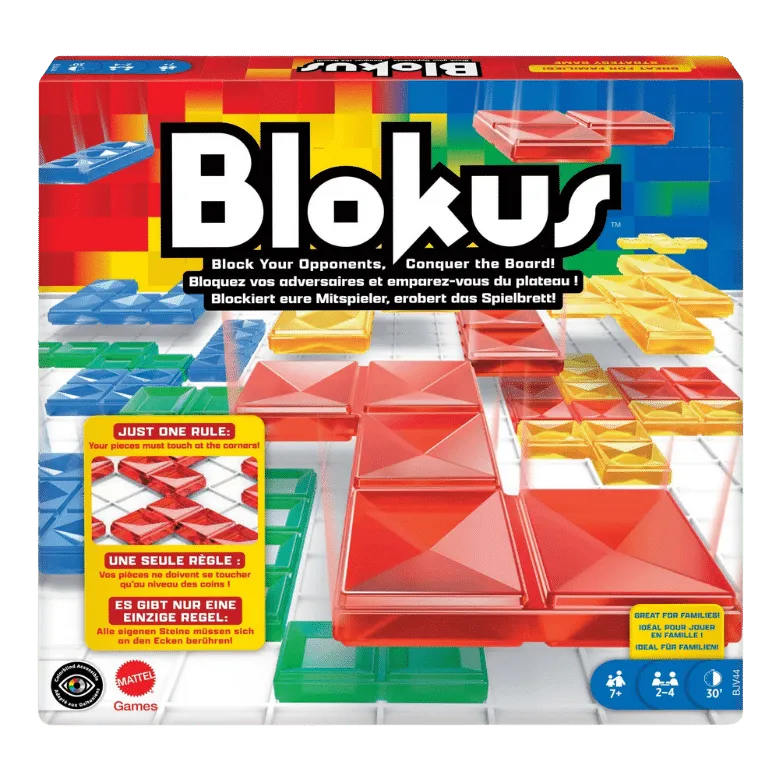
Blokus is a fast-paced strategic tile-placement game that challenges players to think critically while having fun. Using colorful, geometric pieces, players take turns placing shapes on the board, aiming to fit as many of their tiles as possible while blocking opponents. The rules are simple to learn, yet the gameplay requires spatial reasoning, logical thinking, and careful planning ahead. Its bright visual design and engaging strategy make it both appealing and mentally stimulating for a wide range of ages.
- Perfect for: Children working on early academic skills like colors and numbers.
- Skills to Be Developed: Color recognition, counting, turn-taking.
- Level/Age: Young children, ages 3-7, or low to mid-functioning children.
To help your child build confidence and a sense of competence, introduce new players gradually. Start with just you and your child. Once they have mastered the rules and feel comfortable with the game, you can invite a sibling to join. After they’ve successfully played with a small group, you can expand to include another sibling or a friend. This step-by-step approach sets your child up for success and helps them practice their skills in a familiar, low-stress environment. This can be especially empowering for children who often feel left out in social situations. This structured progression helps build their confidence and makes the transition to playing with peers feel natural and positive. This is a key strategy to build social skills in a child with autism.
This fast-paced, visual matching game is an excellent alternative to classic bingo. It helps with visual discrimination, quick thinking, and following a pattern. The “Zinger” tile dispenser adds an engaging, hands-on element to the game, and the immediate reward of finding a match keeps children motivated.
- Perfect for: Children who are visual learners and those who enjoy quick, repetitive play.
- Skills to Be Developed: Visual discrimination, quick matching, turn-taking.
- Level/Age: Young children, ages 4+, or low to mid-functioning children.

By following these tips and introducing these games strategically, you can spark meaningful, enjoyable, and educational experiences for your child. These moments of connection and growth are more than valuable, they are essential in building the confidence and skills your child needs to thrive. At Kinfolk ABA, we know that progress cannot wait. Every day matters, and the right support at the right time makes all the difference.
Our expert team specializes in harnessing the power of play during in-home therapy sessions to unlock potential and accelerate growth. We don’t offer one-size-fits-all solutions, we deliver customized, evidence-based care designed for your child’s unique needs. Your child deserves more than hope, they deserve results. Let us be the partner that helps your family achieve real, lasting progress.
This blog is for informational purposes only and is not a substitute for professional medical or therapeutic advice. Always consult a qualified healthcare provider regarding any questions about autism or behavioral therapy.


